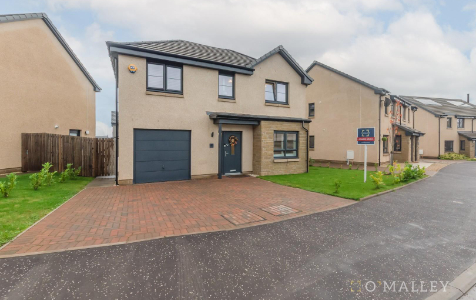
Christmas morning is usually one of the quieter moments of the year. Before the day properly begins and the usual festive rush takes over, there’s a small window of calm.
I remember standing in the shower that morning, thinking about the way buyers experience properties. After 17 years in the industry, working across the Central Belt, it becomes quite natural to walk into a home and quickly see what could be done with it. You look at a room and immediately picture the layout, the furniture, or how the space might evolve over time.
You start to visualise things almost automatically.
You might walk into an empty living room and immediately see where the sofa would sit, where a dining table might fit, or how the room would feel once flooring was updated and the walls were finished in lighter tones. It’s something that comes naturally after spending so many years helping people buy and sell homes.
But I also understand that for many buyers, it’s not always that straightforward.
It’s easy to walk into a property and focus on what’s there today rather than what it could become. An empty room can sometimes feel smaller than it actually is. A dated carpet can distract from the size of the space. Even something simple like bare walls can make it difficult for someone to imagine how their own furniture or style might work there.
That’s when the idea popped into my mind.
Standing there that Christmas morning before the day properly began, I started thinking about how we could help people see the potential in a property the same way we do.
What if there was a way to show buyers not just what a home looks like today, but what it could look like tomorrow?
Over the last few months since that Christmas morning, we’ve spent time focusing on how we could make that idea work properly. Testing it, refining it, and making sure everything was set up in a way that genuinely helps buyers understand what a property could become.
And now the result we have managed to curate is something we are very proud of, and something we now include as part of how we market homes at O’Malley Property.
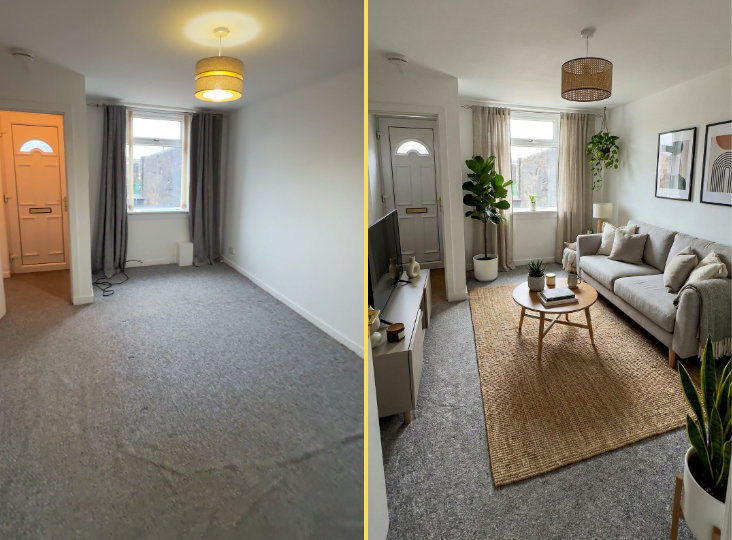
Helping Buyers Picture What’s Possible
When someone views a property online or walks through the door for the first time, they’re often trying to imagine their life there.
Where would the sofa go?
Could that spare room work as a home office?
What would the space feel like with different flooring or furniture?
Could the garden become more usable with a bit of planning?
These are the kinds of questions buyers naturally ask themselves when they view a home.
The challenge is that imagination can sometimes only go so far when you’re standing in an empty space.
Using AI visualisation, we can now create examples that help answer those questions and help bring the possibilities to life.
Sometimes that might mean showing how a room could look furnished with modern flooring, artwork on the walls, and furniture arranged in a way that highlights the size of the space.
In other cases it might demonstrate how a spare room could work perfectly as a home office, something that has become far more important for many people in recent years.
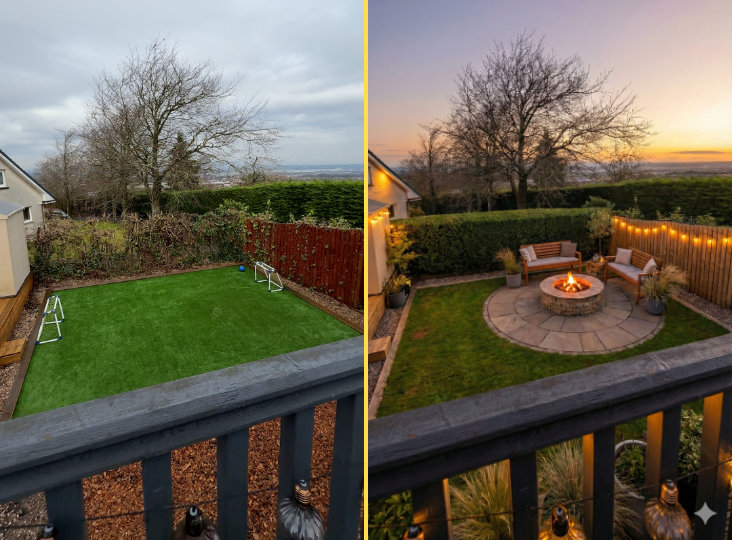
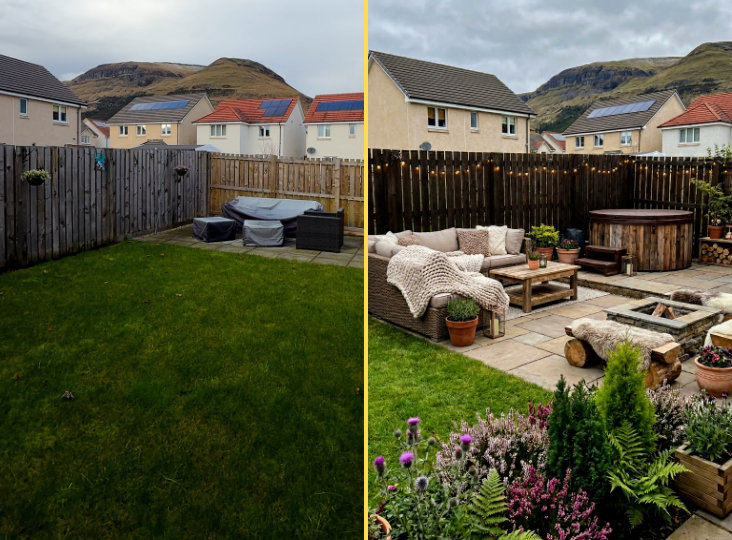
It can even show how outdoor areas might evolve, helping buyers picture how a garden could become a more usable and enjoyable space over time.
Another simple example we’ve been exploring is showing a property from day to night. It’s something many people don’t always think about, but lighting can completely change how a home feels. Buyers usually see properties during the daytime, yet the reality is that much of life at home happens in the evening.
Seeing a room softly lit in the evening can create a completely different sense of atmosphere.
Small visual touches like that can make it much easier for someone to imagine themselves living there.
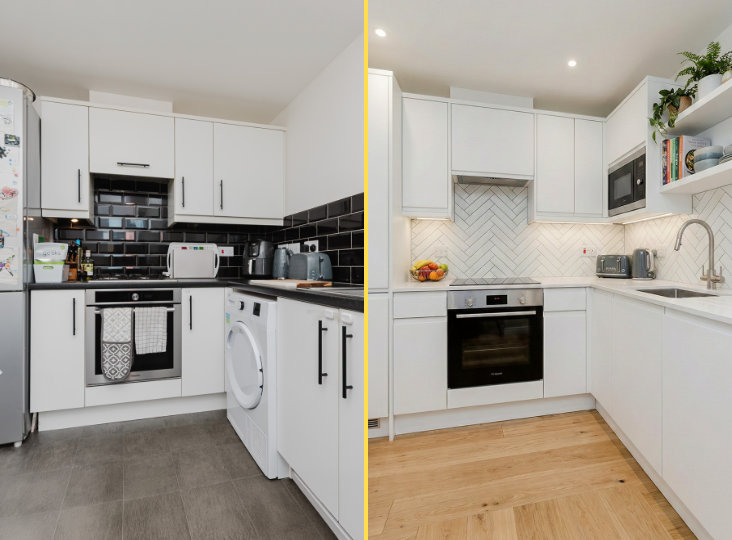
Side-By-Side Visualisation
One of the most helpful ways we present these ideas is by showing side-by-side comparisons.
On one side, buyers see the room exactly as it is today.
On the other, they see an example of what that same space could become.
This simple comparison can make a huge difference. Instead of asking buyers to imagine everything themselves, they can clearly see the potential in front of them.
It often sparks ideas that might not have come to mind otherwise.
Someone might realise a room is actually larger than they thought once furniture is visualised within it. Another buyer might suddenly see how a spare room could become a productive home office or a guest bedroom.
The goal isn’t to redesign the home. It is simply to help buyers connect with the space.
AI Built Into How We Market Homes
The aim isn’t to replace the real property, it’s simply to help people visualise possibilities.
When we create these visuals, they can be included within the property’s marketing in several ways.
Buyers may see them within the video walkthrough, where we can show a room as it appears today before revealing an example of how the space could look with different styling or layout.
They may also appear within the online listing, giving buyers a clearer understanding of the space before they even step through the door.
We also share these visuals across our social media channels. This allows potential buyers to engage with the property and see ideas they may not have considered before.
And importantly, whenever we include an AI visual, it’s simply presented as an illustration of what could be done with the space. It’s there to help spark imagination, not to misrepresent the property.
Transparency is incredibly important when presenting homes, and we always want buyers to feel confident in what they’re seeing.
Looking Ahead: The Future of Property Visualisation
While what we’re doing now is already helping buyers see homes differently, the possibilities don’t stop there.
Looking ahead, there are exciting opportunities to take this even further.
One idea we’ve been exploring is the potential for more interactive walkthroughs where buyers could view a property and then switch between different layout ideas. For example, someone might be able to click and see how a room could look as a living space, a home office, or even a guest room.
Another interesting possibility is the development of more immersive experiences such as virtual walkthroughs that could eventually be explored through VR. This would allow buyers to move through a property and view different design possibilities within the same space.
Imagine being able to stand in a virtual version of a room and switch between different layouts, lighting styles, or furniture arrangements.
It’s an exciting direction that could completely change the way buyers interact with property listings in the future.
A Simple Example of How It Helped
One of the things we’ve noticed since introducing this approach is how it can help buyers see opportunities they may otherwise miss.
Recently we used it to visualise how a room within a property could look once furnished and styled differently. The space itself was already generous and well laid out, but presenting an example of how it could work helped bring the room to life.
A first-time buyer couple viewing the property mentioned that seeing the visual helped them picture how they might shape the home in the future.
Sometimes that’s all it takes.
Helping someone move from seeing a house as it is today, to imagining the home it could become.
Experience Still Matters
Technology will never replace experience in this industry.
But after 17 years, I’ve learned that sometimes the biggest challenge for buyers isn’t finding the right property.
It’s recognising the potential when they see it.
If a simple visual can help someone picture their future home more clearly, then it’s a tool well worth using.
And if it helps the right buyer connect with the right property, then that’s exactly what good marketing should do.